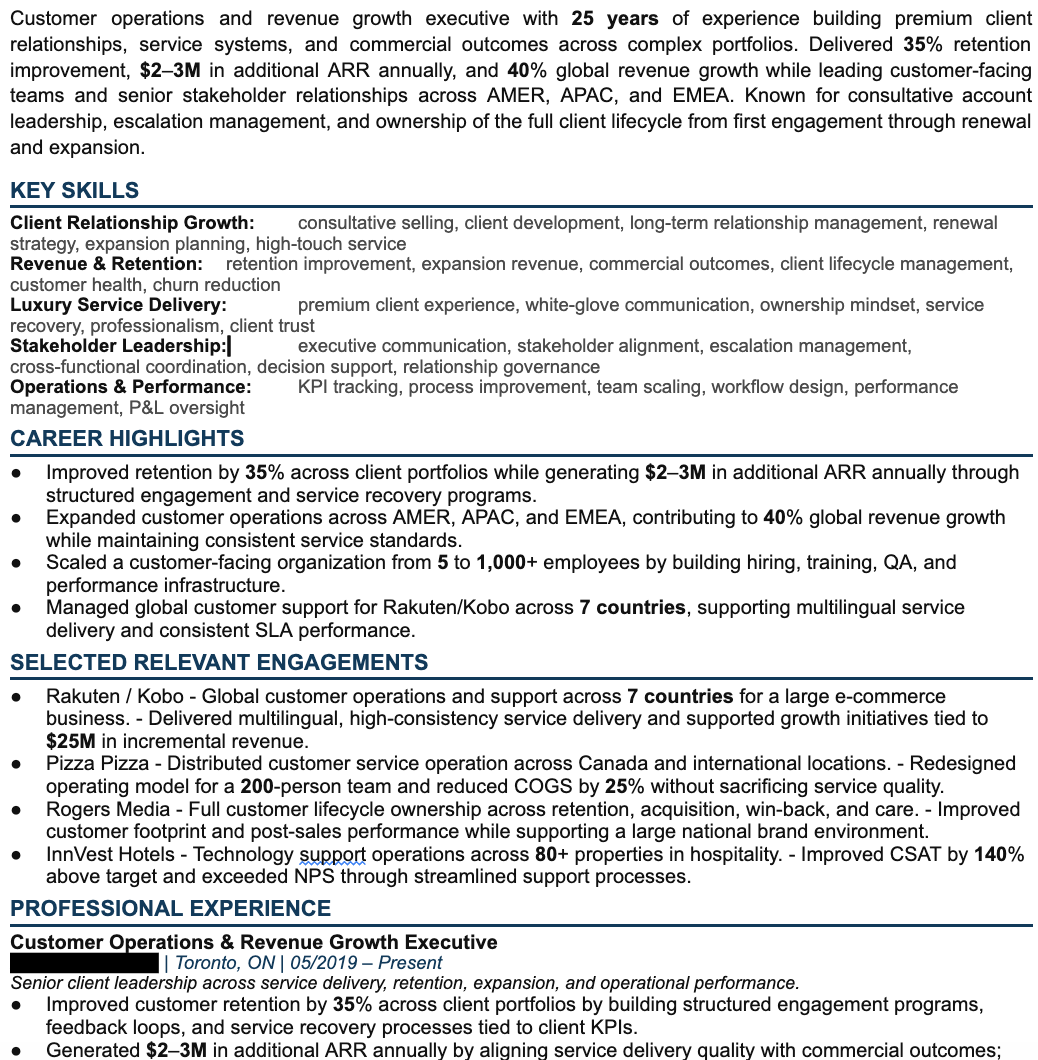
Product leadership, B2B SaaS
Two-column. Outcome-led bullets. Strong skills sidebar for ATS keyword density.
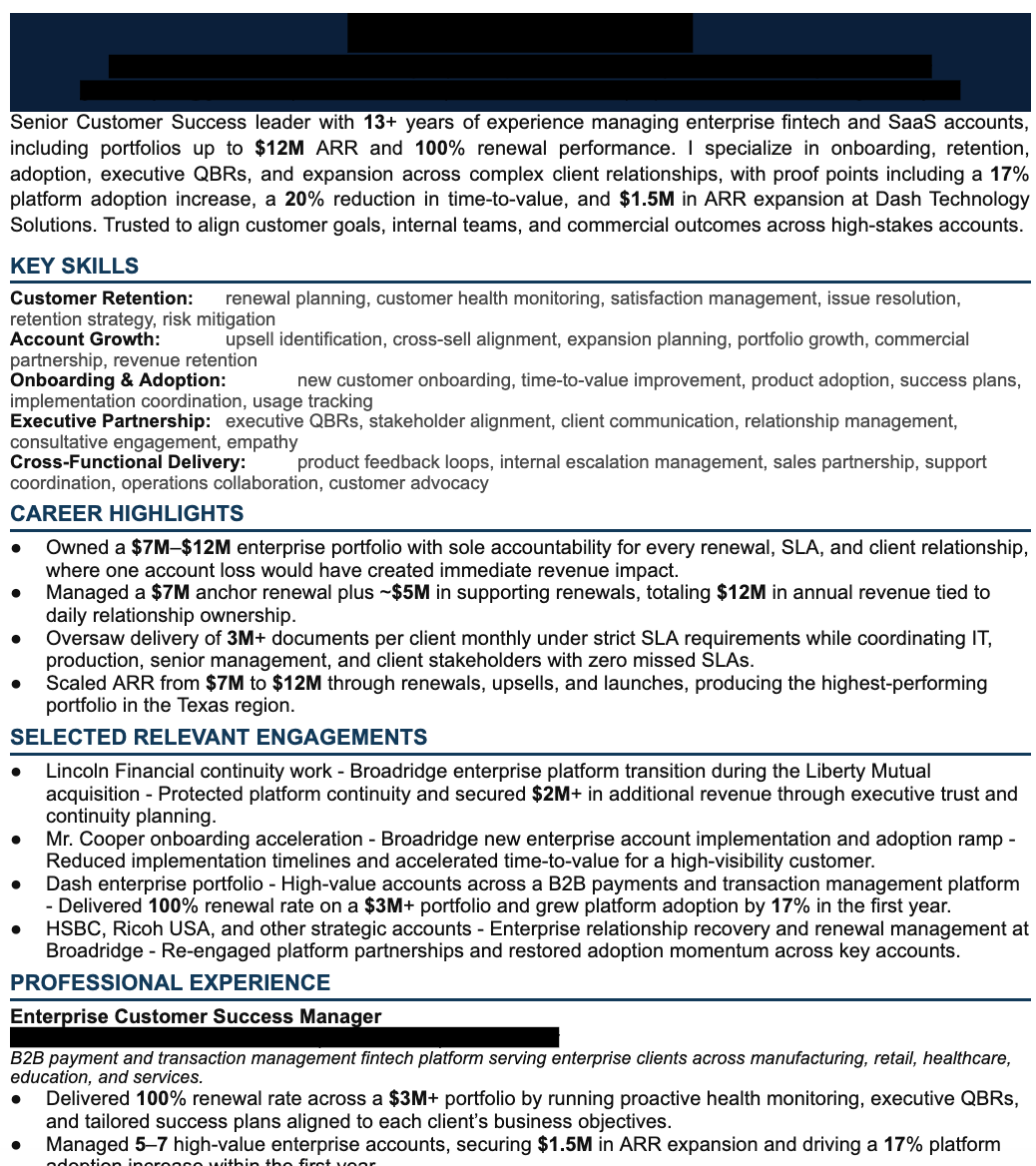
Operations director, multi-region
Single-column editorial. Context line per role. Quantified retention and cost-out outcomes.
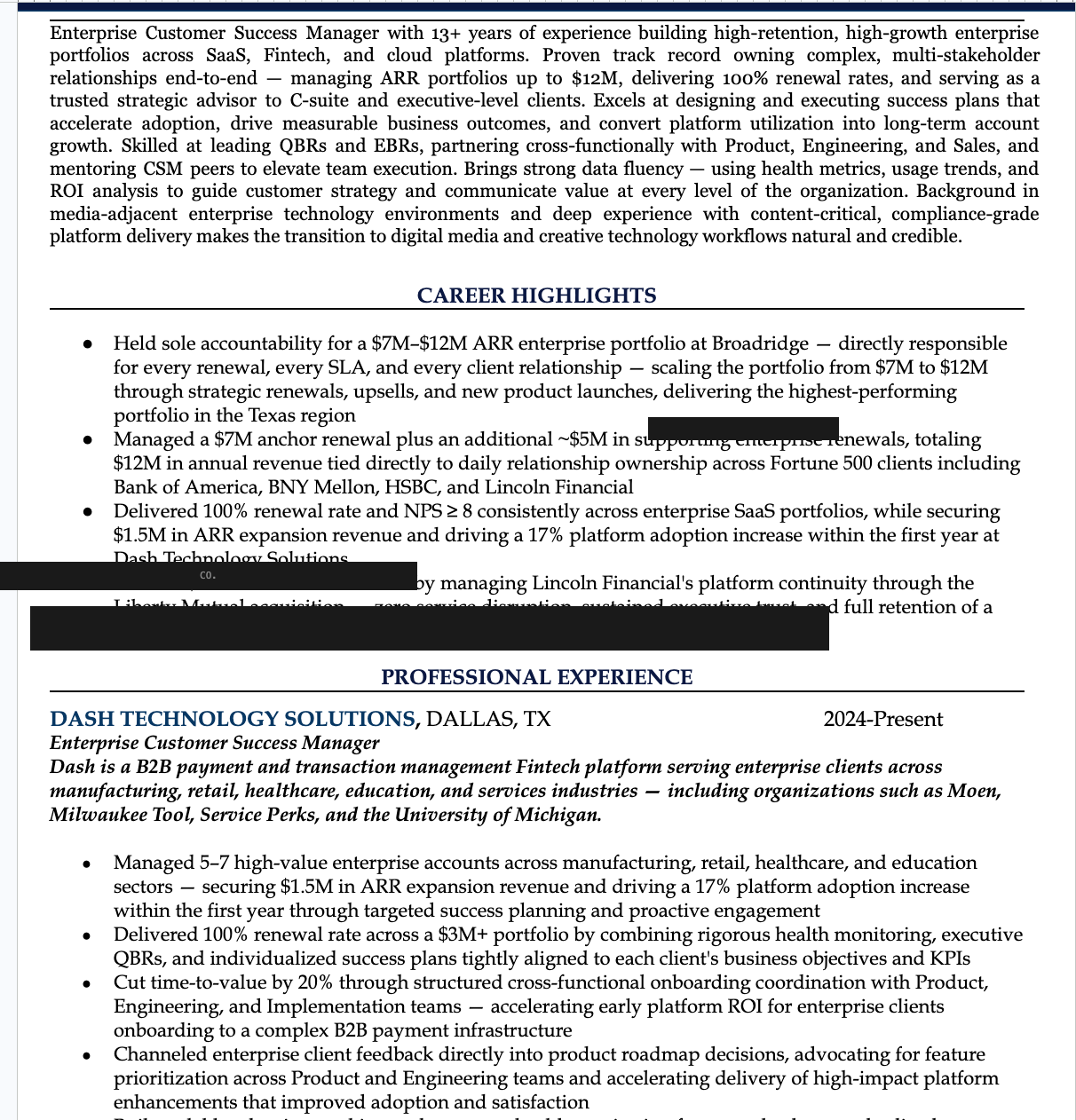
Engineering VP, scale story
Executive summary at top. Team-size + budget context. Bullets weighted to org-design impact.
What every resume here has in common
01
Context lines
Every role opens with segment, scope, and team size — so reviewers immediately understand what the work was, not just where.
02
Outcome verbs
Bullets start with what changed, not what was done. "Grew", "shipped", "retained" — never "responsible for".
03
Numbers in every bullet
If a bullet doesn't have a number, it's a job description, not an accomplishment. Numbers force specificity.
04
Keyword shaping
Skills section reflects the target job description. Not stuffed — shaped. ATS systems weight keyword density, but humans read structure.